
STRAIGHT STREET OF DAMASCUS
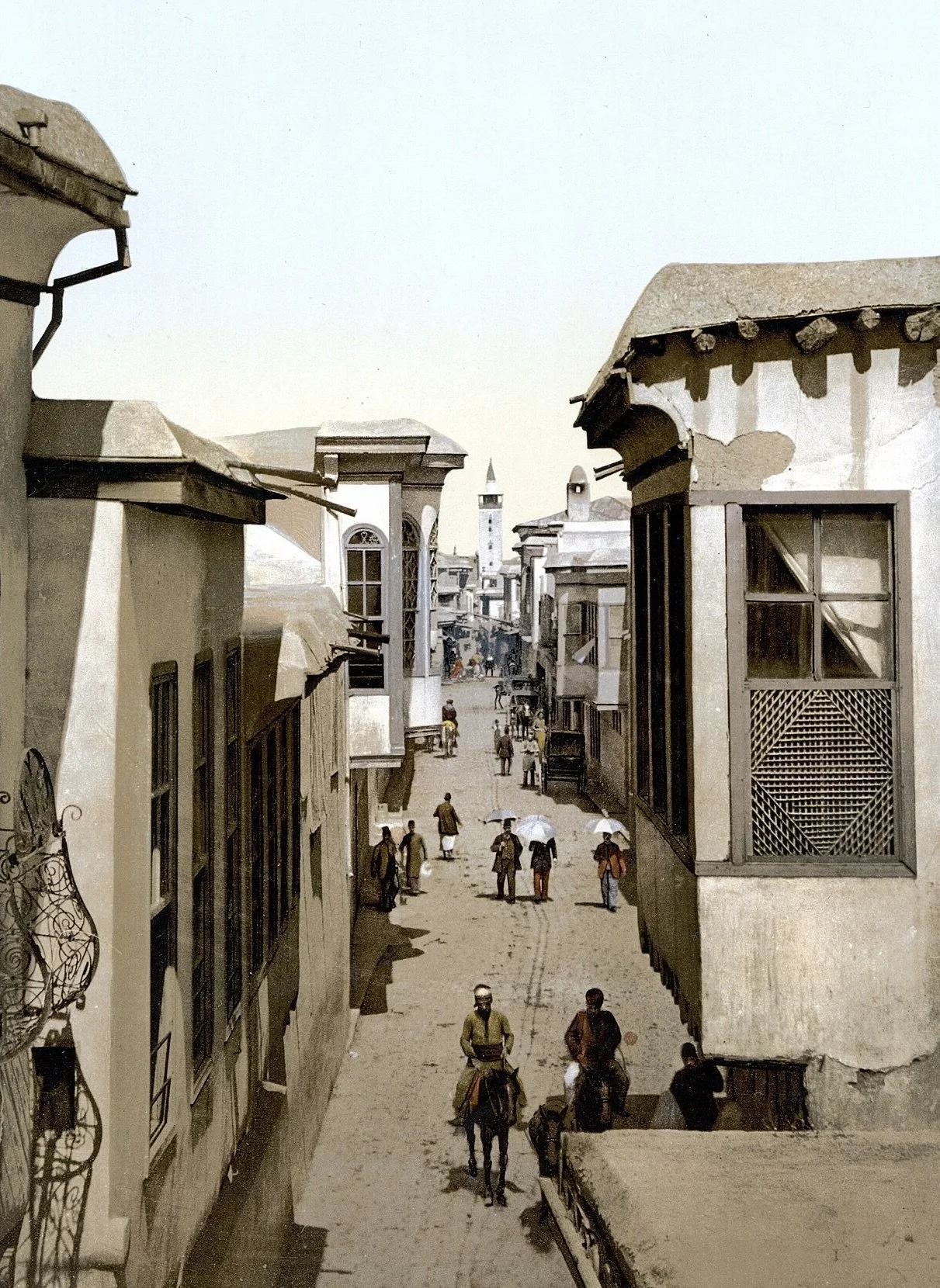
Photo of Sraight Street in old Damascus
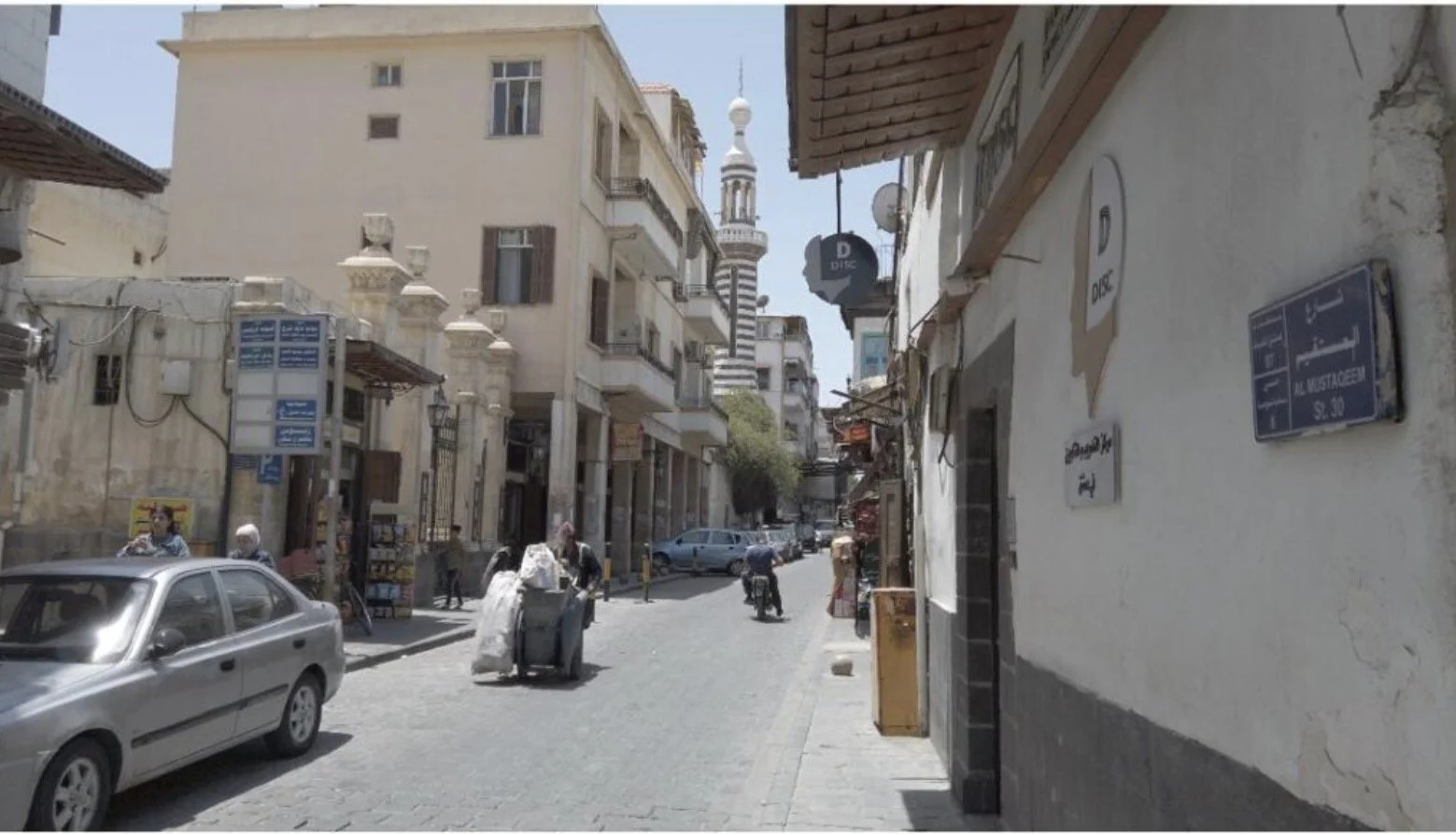
Recent photo from the Eastern Gate of Straight Street in Damascus-Bab Sharqi in Arabic.
Below is the Message Audio followed by Typed Notes.
Straight Street is the main east–west road of the Ancient City of Damascus. It existed during Roman times more than two thousand years ago, and still runs for roughly 1.5 kilometers from the western gate to the eastern gate of the city.
It existed 333 B.C. during Alexander the Great’s conquest.
Damascus existed when Abram was told by God to leave his dwelling in Ur of the Chaldees and go to the land of promise. Genesis 12:1-2: The Lord had said unto Abram,“Get thee out of thy country, and from thy kindred, and from thy father's house, unto a land that I will shew thee, And I will make of thee a great nation, and I will bless thee, and make thy name great; and thou shalt be a blessing” Bible historians estimate this to have been in the 19th or 20th century B.C.
Abram probably passed through Damascus where he got the steward of his house. Genesis 15:2: “And Abram said, Lord God, what wilt thou give me, seeing I go childless, and the steward of my house is this Eliezer of Damascus?”
The primary biblical reference to Straight Street is found in Acts Ch. 9 as Saul requests that the High Priest in Jerusalem empower him to go to Damascus to gather those that came to faith in Christ and “bring them bound to Jerusalem.”
Acts 9:1-18 “And Saul, yet breathing out threatenings and slaughter against the disciples of the Lord, went unto the high priest, and desired of him letters to Damascus to the synagogues, that if he found any of this way, whether they were men or women, he might bring them bound unto Jerusalem. And as he journeyed, he came near Damascus: and suddenly there shined round about him a light from heaven: and he fell to the earth, and heard a voice saying unto him, Saul, Saul, why persecutest thou me? and he said, Who art thou, Lord? And the Lord said, I am Jesus whom thou persecutest: it is hard for thee to kick against the pricks. And he trembling and astonished said, Lord, what wilt thou have me to do? And the Lord said unto him, Arise, and go into the city, and it shall be told thee what thou must do. And the men which journeyed with him stood speechless, hearing a voice, but seeing no man. And Saul arose from the earth; and when his eyes were opened, he saw no man: but they led him by the hand, and brought him into Damascus. And he was three days without sight, and neither did eat nor drink. And there was a certain disciple at Damascus, named Ananias; and to him said the Lord in a vision, Ananias. And he said, Behold, I am here, Lord. And the Lord said unto him, Arise, and go into the Street which is called Straight, and enquire in the house of Judas for one called Saul of Tarsus: for, behold he prayeth, and hath seen in a vision a man named Ananias coming in, and putting his hand on him, that he might receive his sight. Then Ananias answered, Lord, I have heard by many of this man, how much evil he hath done to thy saints at Jerusalem: And here he hath authority from the chief priests to bind all that call on thy name. But the Lord said unto him, Go thy way: for he is a chosen vessel unto me, to bear my name before the Gentiles, and kings, and the children of Israel: For I will shew him how great things he must suffer for my name's sake. And Ananias went his way, and entered into the house; and putting his hands on him said, brother Saul, the Lord, even Jesus, that appeared unto thee in the way as thou camest, hath sent me, that thou mightest receive thy sight, and be filled with the Holy Ghost. And immediately there fell from his eyes as it had been scales: and he received sight forthwith, and arose, and was baptized.”
The context of this passage is the dramatic conversion of Saul of Tarsus, who later becomes known as the Apostle Paul. Saul, a fervent persecutor of Christians, encounters the risen Christ on the road to Damascus, resulting in his temporary blindness. Following this encounter, Saul is led into the city where he stays on Straight Street.
Saul of Tarsus, who later becomes known as the Apostle Paul. Paul became a preacher of the Gospel and made several missionary journeys as a central figure in bringing the Christian faith to the Gentiles and Jews not only in Asia Minor but in some cities in Europe. He made 3 Missionary Journeys from 46 to 57 A.D. His final journey led him to Rome where he was arrested and unfortunately was beheaded around 63 A.D.
Thirteen of the books in the New Testament were authored by the Apostle Paul: Romans, 1st Corinthians, 2nd Corinthians, Galatians, Ephesians, Philippians, Colossians, 1st Thessalonians, 2nd Thessalonians, 1st Timothy, 2nd Timothy, Titus, Philemon, and Hebrews.
Posted on Facebook July 1, 2026.